|
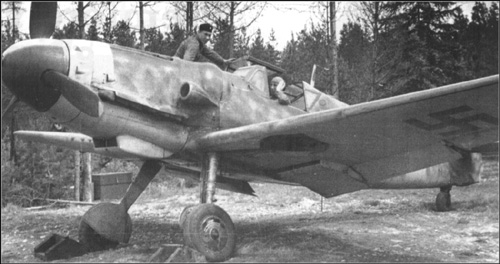
The Squadron was created early in march 1943 and equipped with Messerschmitt Me 109 G-2 fighters, nicknamed Mersu, flown by the top aces of the Finnish Air Force, making it the elite unit. The unit was commanded by Major Eino Luukkanen who succeeded Major Ehrnrooth who was killed in a flying accident only a short period after being posted as commander of Lentolaivue 34.
In Lentolaivue 34, as in all FAF fighter squadrons, saluting and other military manners were not very strict. The relationship between the fighter pilots and their ground crews became "informal" because the fighter plane belonged to both. The men, regardless their rank, would greet each other friendly, then discuss the condition of their aircraft. The pilot and the mechanics were responsible for the plane, one in the air and the others on the ground. A fighter pilot had to trust that the mechanicians were keeping his plane in reliable condition. Without that there would not have been any victorious air combats. Air battle requires mental capital, the basics of which is the pilot's trust in his own fighter, its airworthiness, the proper functioning of its weapons and radio transceiver. One must keep in mind that FAF was chronically short of airplanes, mostly no replacements were available. The pilots knew this, and many a pilot sacrificed his own life trying to save his damaged plane.
Equipped with 28 fighters divided in three Flights the Squadron was operational on the 19th May 1943. During the first 20 days the squadron scored 10 victories and lost two aircraft with pilots: one in accident, the other one was rammed by an I-153 in combat.
Lentolaivue 34 had a heavy responsibility: they had to defend more than 400 km of coastline which included the main harbours and the capital of the country. The operations was divided into three bases:
1. Malmi to defend Helsinki (Finland's capital).
2. Kymi to defend Kotka and Hamina.
3. Suulajarvi to defend the Western section of the main front line.
Major Luukkanen expected that some day the enemy would attack the Kymi base as the Me's would be taking off, but his fear never came true. Yet according to the information gleaned from the shot-down and captured Soviet airmen, the enemy knew perfectly well the location of the base and the defender's small strength.
The Squadron was involved in active fighting. The personnel celebrated the 100th victory on the 11th September 1943. A particularly heavy and successful battle was fought on the 17th May 1944 at Kotka. At 10.30 hrs Major Luukkanen led 10 Me's against 27 Pe-2 escorted by 15 Yak-9 and La-5. The Finnish pilots attacked through the defensive AA fire from below, shooting down eight of the bombers before the escort fighters were able to intervene. Three Yak-9's were shot down in the ensuing dogfight at the cost of one Mersu, whose pilot survived.
On 16 February 1944 the 2nd Flight was detached and posted to the Squadron 30 (now renamed a Fighter Squadron) to defend Helsinki only. In April 1944 the G-2 model was replaced by the more heavily armed G6. Some of the replacment aircrafts were actually the G-6/R-6 subvariant with 2 MG 151/20 cannons in wingmounted nacelles. (Most of these wing cannons were removed though for the sake of better flight characteristics.) The old Mersu's were transfered to Squadron 24.
On the 9th of June 1944 the Red Army launched an offensive against the Finnish Army on the Carelian Istmus. The enemy employed daily at least 1000 aircraft, often flying in 100-plane formations.
There is enough light for 19 hour flying days in mid-summer in the Northern laitudes. The pilots flew a lot, and between missions they took naps in tents that were put up next to the parked fighters. The noise of engines did not disturb them. Only off-duty pilots could sleep in their regular quarters. The morale of the Finnish fighter pilots remained high. The men still cracked jokes and laughed at them, and everyone was eager to fly as much as possible. The strain made the pilots indifferent to their own person, they ceased to consider their situation as abnormally dangerous.
On 12 June 1944 the Squadron 34 had to leave the Immola base for Lappeenranta. A Luftwaffe Task Force, Gefechtsverband Kuhlmey, arrived to the base to assist the Finnish Air Force with some 70 FW-190 of II./JG 54 "Grünhertz"and I./SG 3 and Ju-87's of I./SG 5.
Two days later ,on 14 June, Major Luukkanen led 12 Mersus to search and destroy two balloons the enemy used to control artillery fire against the main defence line at Kuuterselk. The balloons were defended by 20 La-5 and P-39. The Me's engaged the enemy. Luukkanen found himself 30 m behind a P-39 and fired. The victim dived, trailing smoke and fuel fume, then crashed on the ground. His wingman shot down another, together they continued to get at the balloons. Soon the fighting dispersed, as usual. Luukkanen surprised a La-5, whose pilot tried to evade battle, but soon was hit by the Finnish fighter's shells and crashed in the forest. Then Luukkanen saw one balloon against the sky at 600 m. To avoid the AA he first climbed to the South to be able to attack from altitude and from the glare of the sun. This was a successful operation, nearly undisturbed he shot the balloon in flames and retreated. The second balloon was shot down, too, alongside with a third and five enemy fighters at the cost of one Mersu missing.
Luukkanen and his flight returned to base and refuelled. In the afternoon the squadron was sent to intercept Stormoviks terrorising Finnish infantry at Kuuterselkä. That day the squadron fought four air battles, scoring 11 victories and four balloons. One Mersu with pilot was missing. Then a five-hour sleep before a the next, similar day...
On 18 June Major Luukkanen was pleasantly surprised when he heard from the radio news that he had been decorated with the Mannerheim Cross. There was no time for celebration, however.
Next day, on June 19th, Major Luukkanen was shot down but survived the crashlanding.
On 23 June 1944 the squadron once again moved base, this time 40 km NW to Taipalsaari. It was a fieldhastily built on sandy soil. There was a clump of trees in the crossing of the runways, impairing visibility. The sand of the field was blown in the air by slipstream so much that tropical filters had to be fitted in the Messerscmitts. The narrow undercarriage wheels dug ruts in the soft sand so fast that the field maintenance team could not keep up with smoothing the runways. The pilots had to have the skill of juggler to be able to take off and land on the bumpy field.
Lappeenranta and Immola bases were attacked with great force on the evening of the 2nd of July 1944. Finnish radio intelligence had found out about the objective and the time, then they found that the raid had been delayed by 24 hours. A flight took off to intercept them en route to the East of Viipuri, because that was their usual route. But this time the enemy came West of Viipuri and without resistance to Lappeenranta. At first 35 Pe-2's dive-bombed the base, then 40 Il-2's strafed. Two Me-109's were destroyed and two war-booty Pe-2's burned down. Gefechtsverband Kuhlmey was based at Immola, and they had been warned about the coming raid, but the Germans refused to believe Finnish intelligence information. They suffered heavy losses: the enemy bounced Focke-Wulfs at takeoff. Also the 70 German planes (Ju-87 Stukas and F-W 190 Jabos) were placed at the edges of the airfield so the Russians had no problems in hitting them.
On 13 July Major Luukkanen led 12 Me's to escort 40 bombers raiding the Soviet bridgehead at Vuosalmi. Due to the 90-minute endurance of the Me 109 withouf external tank the mission was timetabled by the minute. On schedule the fighters took off and grouped into three sections of four planes before climbing to 5500 m to the meeting point at Vuoksenranta. There they saw forty Finnish bombers arrive in a convoy, just in schedule. The bombers comprised nine Junkers Ju-88 in the front, then four Dornier Do-17 Z, the rest were Blenheim Mk. I's and IV's - all the airworthy bombers of the FAF on that day.
The fighters were spread on each side of the long formation. After about 20 minutes , the Vuoksi river appeared below the formation. The enemy opened heavy AA fire. The Ju's dived for attack, and soon the escort pilots saw flashes of exploding bombs and clouds of dust and smoke rising in the sky from the bridgehead area. The other bombers, one by one, began to deliver their loads from level flight as ten small specks approaching from the South. The enemy interceptors were going to attack.
Luukkanen gave a command over the radio: "Eight up to the right" meaning that two sections engage the enemy while the third stays at the bombers that had not yet dropped their loads. After a few seconds the airspace over the target resembled a beehive. To protect their brothers in arms in the bombers the Finnish fighter pilots tied the attacking Yak-9's in a dogfight. Now the main objective was to prevent the enemy from getting within firing range from the bombers, not scoring victories. However, in the next minute two Soviet fighters dived in flames, but the Mersus had to watch powerlessly how one Blenheim left the formation, trailing smoke. (However, no Blenheims are recorded to have been lost that day. The damaged plane must have been able to land safely.)
As soon as the last three Blenheims had turned North to join the returning convoy, the Mersu's retreated due to threatening lack of fuel. The red low fuel alert light (indicating no more than 20 minutes worth of fuel) was turned on when the fighters were about 15 minutes from the base. Major Luukkanen told his pilots to land at Lappeenranta in case they had any doubts about their fuel reserve. Four Mersu's had to do that.
At Taipalsaari the fighters were reloaded and refuelled. Meanwhile the pilots had a snack, interrupted as all available fighters were scrambled for an interception mission...
The front line on the Carelian Istmus was stabilised finally on the 16th of July. Now the pilots had more time to rest, and Luukkanen could spare some of his time to fishing.
Gefechtsverband Kuhlmey left Finland for the Baltic on the 28 July.
Lentolaivue 34 did not participate in the fighting against Germany in Lapland. To make his men useful the Squadron Leader commanded them to logging work to make firewood, much needed by the national economy.
Lentolaivue 34 scored 345 victories between 29 March 1943 - 4 September 1944.
During the same period his squadron lost 30 Messerschmitts, 18 of which in battle and 12 pilots killed plus one taken prisoner of war.
| Luukkanen's Confirmed Air Victories |
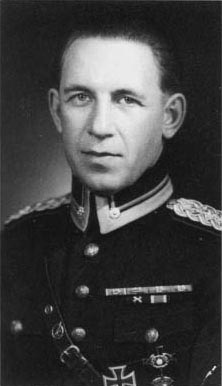
Maj Luukkanen
| Date |
Place |
Plane |
Kill |
Enemy |
|
| 01 Dec -39 |
Kannas |
FR-104 |
1 |
DB-3 |
| 23 Dec -39 |
" |
FR-108 |
½ |
R-5 |
| 06 Jan -40 |
Karjala |
FR-108 |
1 |
SB-2 |
|
| 08 Jul -41 |
Kannas |
BW-375 |
1 |
I-153 |
| 18 Aug -41 |
" |
BW-375 |
½ |
I-153 |
| 30 Aug -41 |
" |
BW-375 |
½ |
MiG-3 |
| " |
" |
BW-375 |
½ |
I-153 |
| 27 Sep -41 |
Karjala |
BW-390 |
½ |
I-15bis |
| 06 Oct -41 |
Aunus |
BW-373 |
½ |
DB-3 |
| 15 Oct -41 |
" |
BW-375 |
1 |
AR-2 |
| 07 Nov -41 |
" |
BW-375 |
1 |
MiG-3 |
| 01 May -42 |
Laatokka |
BW-390 |
1 |
I-153 |
| 20 Jul -42 |
Kannas |
BW-376 |
1 |
Pe-2 |
| 06 Aug -42 |
Suomenlahti |
BW-393 |
1 |
I-16 |
| 31 Aug -42 |
" |
BW-393 |
1 |
I-153 |
| 25 Sep -42 |
Laatokka |
BW-393 |
1 |
Pe-2 |
| 22 Oct -42 |
Suomenlahti |
BW-393 |
2 |
I-16 |
| 30 Oct -42 |
" |
BW-393 |
1 |
I-16 |
| " |
" |
BW-393 |
1 |
Spitfire |
| 19 May -43 |
" |
MT-224 |
1 |
I-153 |
| 21 May -43 |
" |
MT-201 |
1 |
LaG-5 |
| 22 May -43 |
" |
MT-201 |
1 |
LaGG-3 |
| 24 Jun -43 |
Kannas |
MT-215 |
1 |
LaGG-3 |
| " |
" |
MT-215 |
1 |
Boston |
| 16 Jul -43 |
Suomenlahti |
MT-201 |
1 |
Pe-2 |
| 20 Jul -43 |
Suomenlahti |
MT-201 |
1 |
LaGG-3 |
| 04 Sep -43 |
" |
MT-201 |
1 |
La-5 |
| 08 Sep -43 |
" |
MT-201 |
1 |
LaGG-3 |
| 27 Oct -43 |
" |
MT-201 |
1 |
Il-2 |
| 04 Nov -43 |
" |
MT-216 |
2 |
La-5 |
| 06 Mar -44 |
" |
MT-201 |
1 |
Pe-2 |
| " |
" |
MT-201 |
1 |
La-5 |
| 08 May -44 |
" |
MT-417 |
1 |
Pe-2 |
| 17 May -44 |
" |
MT-417 |
1 |
Pe-2 |
| 14 Jun -44 |
Kannas |
MT-417 |
2 |
La-5 |
| " |
" |
MT-417 |
1 |
Airacobra |
| 17 Jun -44 |
" |
MT-417 |
1 |
La-5 |
| " |
" |
MT-417 |
1 |
Il-2 |
| 20 Jun -44 |
" |
MT-415 |
1 |
Jak-4 |
| 21 Jun -44 |
" |
MT-415 |
1 |
Il-2 |
| 23 Jun -44 |
" |
MT-415 |
1 |
Il-2 |
| " |
" |
MT-415 |
2 |
DB-3F |
| 28 Jun -44 |
" |
MT-415 |
1 |
U-2 |
| 30 Jun -44 |
" |
MT-415 |
1 |
Airacobra |
| " |
" |
MT-415 |
1 |
La-5 |
| 03 Jul -44 |
" |
MT-415 |
1 |
Il-2 |
| " |
" |
MT-415 |
1 |
Pe-2 |
| 05 Jul -44 |
" |
MT-415 |
1 |
LaGG-3 |
| " |
" |
MT-415 |
1 |
Il-2 |
| 09 Jul -44 |
" |
MT-415 |
1 |
Jak-9 |
| 18 Jul -44 |
" |
MT-415 |
1 |
Airacobra |
| 25 Jul -44 |
Suomenlahti |
MT-415 |
1 |
Jak-9 |
| " |
" |
MT-415 |
1 |
Il-2 |
| 05 Aug -44 |
Suomenlahti |
MT-451 |
1 |
Jak-9 |
|
|
|
TOTAL: |
56 |
|
|
|
Sources:
WW II Ace Stories. http://www.elknet.pl/acestory/aces.htm
Keskinen, Stenman, Niska: Suomen ilmavoimien historia 11 - Hävittäjä-ässät. Forssa, 1994
Thanks to Gerfaut and Nattulv for their help and dedication.
|